
Do you know a “Witch’s Bottle?”
I hadn’t heard the name until I started researching all things magical for my Haunted Hotel Mysteries series.
And despite the wonderfully creepy name, a witch bottle wasn’t something a witch carried around.
It was something people used against witches.
Witch bottles became particularly common in England and Wales during the 1600s, when a run of bad luck could have a much more sinister explanation than it does today.
Someone became mysteriously ill. A cow stopped giving milk. A baby wouldn’t stop crying. Food spoiled. Crops failed.
Maybe someone had bewitched you.
And if you believed a witch was responsible, you needed protection.
Enter the witch bottle.
What Was Inside a Witch Bottle?
This is where things get wonderfully weird.
A typical witch bottle might contain pins, bent nails, thorns or other sharp objects.
But those weren’t necessarily the strangest ingredients.
Some contained hair or fingernail clippings. Others contained blood.
And quite a few contained human urine.
Yes. Urine.
The idea was that something from the afflicted person created a connection between that person and the bottle.
The sharp objects inside were intended to trap, repel or torment the evil magic being directed at them.
Sometimes the bottle was heated. Sometimes it was buried.
Most importantly, it was hidden.
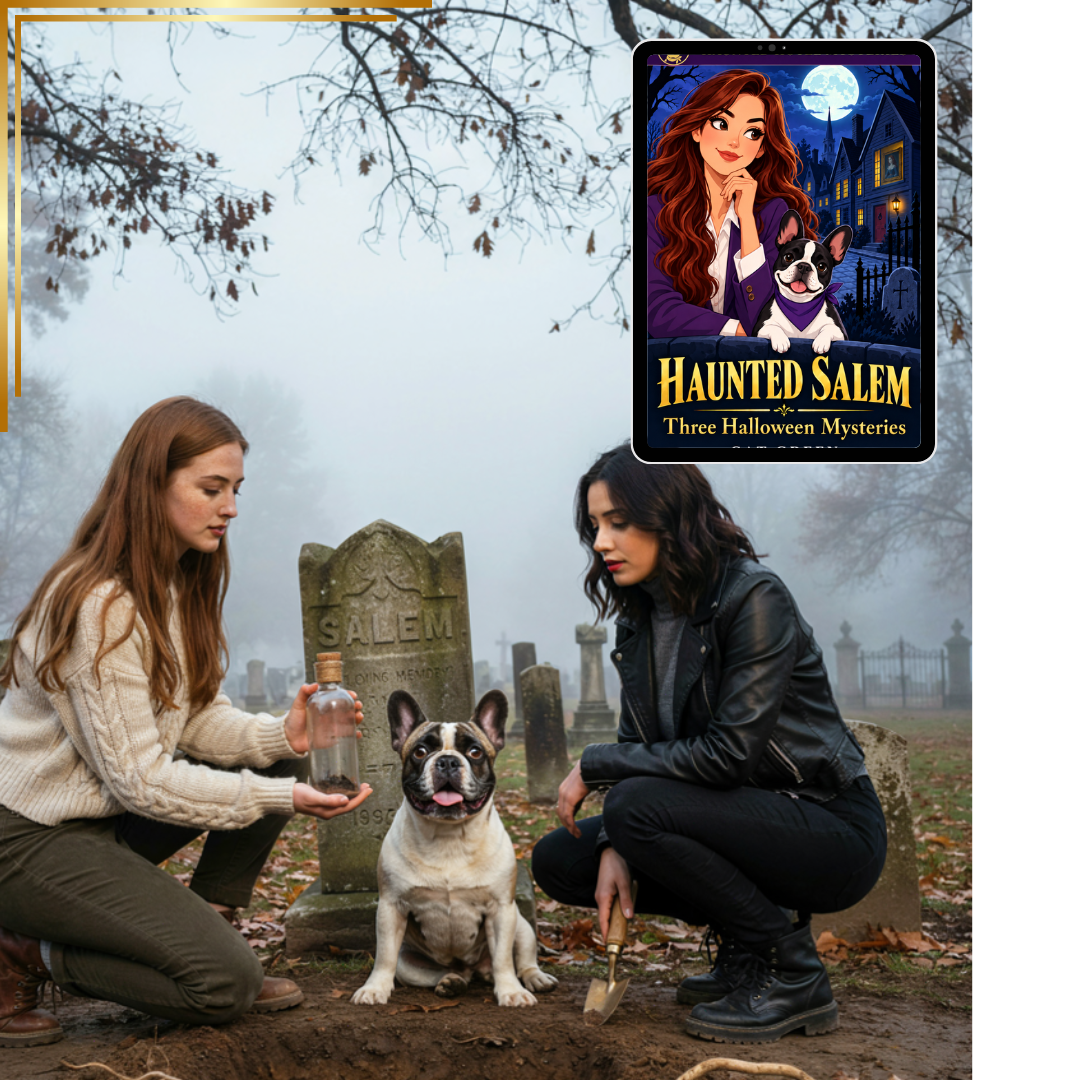
Imagine Finding One in Your House
Witch bottles have been discovered beneath hearths, under floors, inside walls and near the entrances to old houses.
Which makes perfect sense if you think about it.
These weren’t decorations.
They were protection.
The bottle was placed somewhere it could quietly
stand guard against whatever might try to enter the house.
And then everyone forgot about it.
Years passed.
Then decades.
Then centuries.
A house was renovated or demolished and someone pulled up a floorboard or opened a wall.
And there it was.
A sealed bottle deliberately hidden by someone who had lived in that house hundreds of years earlier.
Now comes the important question.
Would you open it?
Because I am pretty sure I wouldn’t.
You can tell me that the bottle contains nothing more frightening than some rusty nails and several-hundred-year-old bodily fluids.
That’s quite enough for me.
I’d put the floorboard back.
Witch Bottles in Salem
Naturally, witch bottles fascinated me when I began writing about Salem.
Salem already has that wonderful collision of real history, folklore, superstition and the supernatural.
Walk through the city and you’re constantly reminded that the people who lived centuries ago experienced the world very differently than we do.
That became part of the atmosphere I wanted for Haunted Salem.
One of the places that captured it perfectly was Charter Street Cemetery, also known as the Old Burying Point Cemetery, one of Salem’s oldest cemeteries.
It isn’t difficult to imagine Nina Brown walking among those old gravestones.
Nina is a young travel-magazine editor with a slightly unusual problem.
She sees ghosts.
That’s what happens when you’ve been clinically dead for twenty minutes.
So when Nina arrives in Salem, a historic cemetery isn’t simply a historic cemetery.
And the strange old beliefs surrounding witch bottles aren’t merely interesting pieces of folklore.
In Nina’s world, you never know which old superstition might contain a little more truth than you’d like.
That’s part of the fun of the Haunted Hotel Mysteries: real places, strange bits of history, old hotels, ghosts, mysteries and a French bulldog named Jasper who would probably investigate a witch bottle immediately.
Nina might know better.
Would you?
If you found a sealed witch bottle hidden beneath the floorboards of an old house, would you open it?
And if you’d rather investigate Salem’s mysteries from a safe distance, you can join Nina and Jasper in Haunted Salem by Cat Green Author.